No matter where you go in Japan, there’s always something local and special waiting for you — a dish you can only eat there, a festival that happens once a year, or a quirky mascot you’ve never seen before.
In contrast, traveling around England often feels a bit similar from place to place. The countryside is beautiful, of course. But the variation in food and local culture doesn’t feel as dramatic as it does in Japan.
Here are a few reasons why traveling in Japan feels so exciting and rewarding.
Local Food That Truly Feels Local
In Japan, every region takes pride in its specialty dishes. From Hokkaido’s miso ramen to Hiroshima’s okonomiyaki and Nagoya’s miso katsu, even smaller towns often have a unique food culture that attracts visitors.
Nabe – A Taste of Regional Identity
One dish that beautifully showcases Japan’s regional diversity is nabe, a hot pot meal enjoyed especially during winter.
Although nabe is common throughout Japan, each region has its own distinctive style:
Hokkaido – Ishikari Nabe
A miso-based hot pot filled with salmon, potatoes, onions, cabbage, daikon, and corn. It reflects Hokkaido’s rich seafood culture and hearty ingredients suited to its cold climate.

Akita – Kiritanpo Nabe
Grilled mashed rice wrapped around skewers and added to a chicken-based broth with vegetables. It uses hinaijidori, a premium local chicken breed known for its rich flavor.

Fukuoka – Motsu Nabe
Made with pork intestines simmered in a soy sauce or miso broth with garlic chives and cabbage. Despite its humble ingredients, it has become a beloved specialty in northern Kyushu.

Through nabe, you can literally taste the history and pride of each region.
Ramen – Reinvented and Perfected
Japanese ramen, originally inspired by Chinese noodles, has evolved into something uniquely Japanese and is now loved all over the world.
Japan’s passion for perfecting food has turned ramen into an art form. Even in China, many people admire how Japan has developed it.
Japan has 47 prefectures, and nearly every one has its own local ramen style. Some regions even have multiple variations. New ramen is constantly being created somewhere in the country, making it almost impossible to try them all.
Hokkaido: Sapporo Ramen

Sapporo, the capital of Hokkaido, is especially famous for its ramen.
It is best known for its rich miso-based broth and medium-thick curly noodles.
One of its signature toppings is butter and corn — an unexpected yet surprisingly perfect combination. The butter melts into the broth, creating a rich and mellow flavor, while the corn adds natural sweetness. It perfectly reflects Hokkaido’s dairy and agricultural culture.
Of course, Sapporo also offers shōyu (soy sauce) and shio (salt) varieties, so there’s something for everyone.
Fukushima: Kitakata Ramen

Kitakata City in Fukushima Prefecture has long been known as a ramen town. Its ramen, with nearly 100 years of history, is considered one of the “Three Great Ramens of Japan,” alongside Sapporo and Hakata ramen.
Kitakata ramen is famous for its flat, thick, high-water-content noodles called hirauchi jukusei takasui-men. These noodles are aged to develop a chewy texture that pairs beautifully with the typically soy sauce-based broth.
One key factor in its flavor is the ultra-soft local spring water, which gives the soup a smooth and gentle taste.
Kitakata also has a unique food culture known as asa-ramen — eating ramen for breakfast. Some say this tradition began with factory workers finishing night shifts, while others believe it helped warm travelers arriving on cold winter trains. Whatever the origin, ramen has been part of daily life here for generations.
Small Japanese Lesson: Describing Ramen Broth
• こってり (kotteri) – Rich, heavy, and thick. Often used for long-simmered pork bone broths full of umami and emulsified fats.
• あっさり (assari) – Light, clean, and simple. Used for clearer broths like shio or light shōyu ramen.
2. Climate and Four Distinct Seasons
Japan stretches vertically from north to south, and its mountainous terrain creates dramatic regional differences in climate.
Cherry blossoms in spring, fireworks in summer, red maple leaves in autumn, and snow-covered hot springs in winter — Japan’s four seasons deeply shape local traditions and lifestyles.
Let me introduce two very different prefectures: Toyama and Nara.
Toyama – Snow and Seafood Treasures

Toyama, located on the Sea of Japan coast, is famous for heavy snowfall in winter. The surrounding mountains and the deep waters of Toyama Bay create ideal conditions for seafood.
One of its most prized delicacies is shiro ebi (white shrimp), often called the “Jewel of Toyama Bay.” With its delicate sweetness and melt-in-your-mouth texture, it can be enjoyed as sashimi or tempura.
Because of Toyama Bay’s unique geography, it is one of the few places where these shrimp can be harvested in commercial quantities.
Nara – A Sacred City Surrounded by Mountains

Nara is my hometown — an ancient capital of Japan before Kyoto.
You may have seen the deer bowing to tourists for rice crackers. These deer are considered messengers of the gods, and they have been protected for centuries. Today, over 1,000 deer roam freely in Nara Park, which covers about 511 hectares.
While Kyoto is known for its grand and luxurious temples, Nara feels quieter and more spiritual. It’s often said that Nara is the kind of place people want to move to after they turn 60.
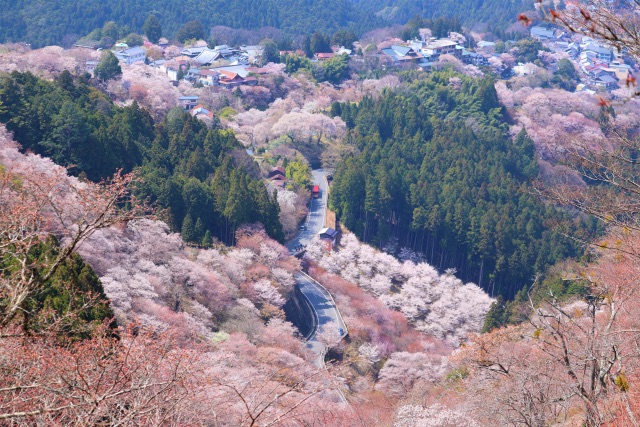
In spring, Yoshino in southern Nara becomes one of Japan’s most spectacular cherry blossom destinations, with around 30,000 cherry trees covering the mountainside in pink.
Because Nara is landlocked and far from the sea, unique preservation foods developed. One example is kakinohazushi (persimmon leaf sushi), where vinegared rice and mackerel are wrapped in persimmon leaves, which naturally have antibacterial properties.
Toyama and Nara belong to the same country, yet geography has shaped them into completely different worlds.
Getting There Is Part of the Fun
Japanese trains are clean, punctual, and reliable — but they’re also part of the experience.
From the sleek Shinkansen to local trains decorated with anime characters, transportation itself feels exciting.
Even something as simple as an ekiben (regional train lunch box) becomes a cultural experience. You don’t just travel — you taste your journey.
Gran Class
There are four main types of seats on the Shinkansen: Gran Class, Green Car, reserved seats in regular cars, and non-reserved seats in regular cars.
Gran Class is the highest class available. The seating is arranged in a spacious 2+1 layout, offering wide seats with generous legroom. The seats recline deeply and come equipped with both footrests and leg rests, creating a space comparable to first class on an airplane.
Depending on the route, passengers may receive complimentary beverages and light snacks, along with exclusive amenities that make the journey feel even more special.
A Gran Class ticket costs almost twice as much as a reserved seat in a regular car. For example, traveling from Tokyo to Shin-Hakodate in Hokkaido costs around £200 per adult.
That said, even regular reserved seats are already very comfortable. Still, if you have the chance, paying a little extra to experience something close to first class on rails can be well worth it.
Ekiben: A Station Lunchbox Experience

Ekiben are boxed meals sold at train stations across Japan, often featuring local ingredients and regional specialties.
Eating an ekiben while watching the scenery pass by the window is a simple yet unforgettable experience — one that perfectly captures the charm of train travel in Japan.
In Japan, even transportation reflects regional pride and attention to detail.
But Why Is Japan So Different?
Japan is slightly larger than the UK in total land area. However, because so much of Japan is mountainous, its habitable land is much smaller. The UK actually has about 1.7 times more livable land.
Historically, rivers and canals in the UK connected regions, making movement of people and goods relatively easy.
In Japan, mountain ranges divide many regions, especially across Honshu. This geographical separation allowed distinct regional cultures to develop independently.
Although globalization has erased much local culture in many countries — including Japan — the country has done a remarkable job preserving its regional identities, traditions, and language.
And I’m proud of that.
Final Thoughts
Living abroad has made me realize just how magical domestic travel in Japan truly is.
Thanks to Japan’s well-developed transportation system, traveling around the country is comfortable and accessible. In fact, only about 17% of Japanese people hold passports, compared to around 80% in the UK. Many Japanese people simply don’t feel the need to travel abroad — there is already so much diversity at home.
It’s not just about the destinations.
It’s about the pride, the detail, and the deep regional character you can feel at every stop.
Traveling in Japan feels like visiting a different country each time.
And I can’t wait to explore more.