After talking about why I’m happy to have left Japan(→Japan: The Reasons:I’m Happy About Leaving
), now I want to share what I miss the most.
1. The Medical System in Japan
In Japan, all residents are required to join the public health insurance system. (I’ll explain insurance fees later.) Thanks to this system, you only pay 30% of your medical costs out of pocket.
Unlike in the UK, Japan does not have a GP system. You can visit any hospital or clinic directly, including specialists—and the same applies to dentists.
When I lived in Japan, I would check Google Maps reviews and choose a clinic near my home. If I needed medication, I went to a gynecology clinic. If I twisted my ankle, I went straight to an orthopedic clinic. Because there is no GP, it can sometimes be confusing to know which department to visit. However, I personally liked this system because I could see a specialist much faster than in the UK.
Insurance Fees
If you are employed, you pay into Shakai Kenkō Hoken, the company-based social insurance system.
If you are self-employed or unemployed, you pay Kokumin Kenkō Hoken, the National Health Insurance, directly to your local government.
The amount you pay depends on factors such as your income and where you live, so it’s quite complicated. I won’t go into detail here, but for example:
A single person earning ¥4,600,000 (about $34,000) per year—the Japanese average—would pay around ¥230,000 (about $1,700) annually for social insurance.
If You Are Diagnosed With an Intractable Disease
For patients with designated intractable diseases, the self-pay rate is reduced from 30% to 20%, and a monthly cap on medical expenses is set based on household income.
This means that even expensive treatments are limited to a fixed maximum amount per month. In some special cases, such as patients who rely on artificial respirators, the cost can be as low as ¥1,000 per month.
One of my family members in Japan suffers from a designated intractable disease, and this subsidy system has been an enormous help. Without it, the financial burden would have been overwhelming.
Access to Insurance and Ongoing Challenges
Japan’s National Health Insurance system used to require foreigners to stay in the country for more than one year before enrolling. However, a legal amendment in 2012 lowered this requirement to three months.
Since then, discussions have emerged about how to ensure the system remains fair and sustainable for everyone who contributes to it. Balancing accessibility with long-term stability is an ongoing challenge—but overall, the system still provides an impressive level of care and security.
Dentists (My Personal Nightmare)
Where I currently live in the UK, there is a severe shortage of NHS dentists. The waiting list is seven years—yes, seven.
Because of this, I’ve had no choice but to go to a private dentist, and I’ve already spent over £3,000. Now I’ve been told I need two root canal treatments, which will cost an additional £4,000.
Please… someone help me.
Honestly, Japan’s healthcare system is one of the best in the world in terms of both quality and accessibility.
Looking back, I sometimes feel a little foolish for leaving it behind.
Oh… my poor £4,000.
2. Food
Eating out in Japan feels like heaven. Prices are reasonable, quality is consistently high, service is excellent, and the variety is endless. It honestly feels like the entire country was designed for food lovers.
And it’s not just restaurants—supermarkets and convenience stores are fantastic too. Every season brings limited-edition products, such as sakura-flavored sweets in spring or chestnut desserts in autumn. Even convenience store food isn’t just convenient—it’s genuinely fun and delicious.
One of my favorite experiences was walking through the food halls of large department stores like Takashimaya. They’re similar to Harrods in London—luxurious, beautifully presented, and full of high-quality food. These food halls are usually located in the basement and are called depachika (from “department store” and chika, meaning underground). They aren’t cheap, but they are absolutely delicious. Just walking around and picking up your favorite food feels special.

Fresh, High-Quality Sushi
These days, you can eat sushi almost anywhere in the world. But how many types of fish have you actually tried?
In the UK, the sushi I usually see is limited to tuna, salmon, prawn, and mackerel—maybe around ten types in total. In Japan, however, the world of sushi is enormous.
Bluefin tuna, conger eel, abalone, bonito, crab, flatfish, amberjack, monkfish liver, sardines, sea urchin, salmon roe, and many more are considered standard. When you add regional, seasonal, and restaurant-specific varieties, the number easily reaches 40 or 50 types—if not more.

One of my dreams is to eat as much seafood as possible, especially sushi and sashimi. I’ve already made a list of what I want to eat on my next trip back to Japan, and more than half of it is fish.
One example is konoshiro (gizzard shad). It has white flesh, strong umami, and a rich flavor from its fat, although it does have many small bones. It’s usually marinated in vinegar and served as sushi, and the balance between acidity and umami is so perfect that it’s delicious even without soy sauce. It’s especially flavorful in winter, when it’s in season. It’s not as famous as tuna, but it’s deeply loved by sushi fans in Japan.

3.Public transportation

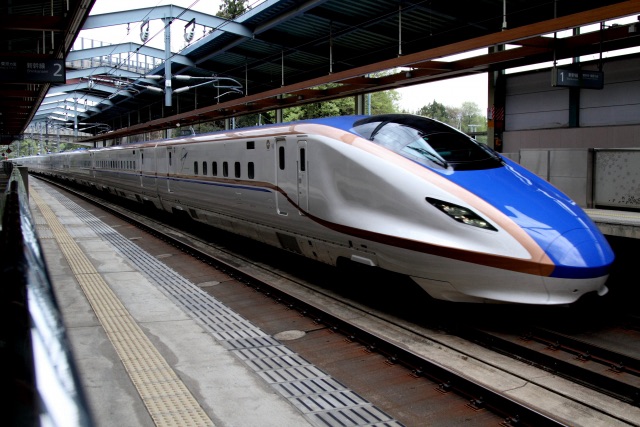
Public transportation in Japan is another thing I truly miss. Trains are almost always on time, extremely clean, and there are countless options.
I miss the Shinkansen the most. Where I live in the UK now, it takes about five hours by train to get to London. By comparison, traveling from Osaka to Tokyo—roughly the same distance—takes only 2 to 3 hours. It still amazes me that the UK, which invented the world’s first train, doesn’t have a bullet train.
Here, the options are driving, taking a slow train, or an even slower bus. I honestly wish I could import the Shinkansen to the UK.
Ekiben: A Station Lunchbox Experience
In Japan, trains aren’t just a way to get from one place to another—they’re part of the experience. One of the best parts of riding the Shinkansen is ekiben, or station bento.
These boxed meals are sold at Shinkansen train stations and often feature local ingredients and regional specialties. Eating an ekiben while watching the scenery pass by is something everyone should experience at least once.

Buses in the UK
In Japan, I used buses and trains regularly from the age of 16 to 22 for school and work. They were always on time and almost never late.
When I first moved to the UK, I waited for a bus that simply never came. It was a huge shock. The bus near my house was supposed to come once an hour, but somehow I ended up waiting another full hour for the next one. To this day, I still don’t know what happened—did the driver just not show up?
Because of that, I spent nearly a year walking an hour to the nearest supermarket and carrying heavy bags back home until I finally got a car. I must have looked especially miserable on rainy days. Still, I preferred moving forward rather than standing at a bus stop, waiting for a bus that might never arrive.
4. Customer Service
If you’ve ever shopped or eaten out in Japan, you know what I mean when I say the customer service is next-level. Staff greet you with a cheerful “Irasshaimase!” the moment you walk in, and they remain polite and professional no matter how busy they are.
In the UK, customer service can be hit or miss. Sometimes it feels like you’re bothering staff just by showing up. Not everywhere is like this, of course—but I definitely miss the warmth and consistency of service in Japan.
Is It Okay to Say “Excuse Me”?
In the UK, my British husband taught me to raise my hand slightly and make eye contact with staff instead of calling out “Excuse me.” In Japan, saying “Sumimasen!” out loud to get attention is completely OK.
To me, it doesn’t feel like shouting—but to my husband, it definitely does. It’s a small cultural difference, but an interesting one.
No Tipping Culture
Even when you receive great service in Japan, tipping is not expected. High-quality service without tips is simply the norm. While some places may accept tips due to globalization, many staff members will politely refuse because it’s not part of the culture.
5. Safety and Cleanliness
Japan is one of the safest and cleanest countries in the world. I used to walk home late at night without worrying, and it’s not unusual to see young children riding trains alone—something that would feel shocking in many other countries.
Almost No Public Trash Bins
Despite the lack of public trash bins, the streets are remarkably clean. That’s because people take their rubbish home. For example, if you buy something at a convenience store and eat it there, you can use the store’s bin. But if you finish it elsewhere, you’re expected to carry the trash with you.
It’s also considered rude to throw trash into a convenience store bin if it didn’t come from that store. These small habits reflect how much respect people have for shared spaces.
A Japanese YouTuber’s Phone Was Stolen in London
I once heard about a Japanese YouTuber whose phone was stolen at a café in London. (→YouTube )A young woman wearing a face mask and a hat approached her table, asking for money. While talking, she casually placed a piece of paper over the YouTuber’s phone, which was lying on the table. After chatting for a minute or two, the woman left as if nothing had happened.
The YouTuber was happily talking with her friends and didn’t notice anything strange at the time. It wasn’t until about ten minutes later that she realized her phone was gone. By then, of course, it was too late.
Apparently, this kind of distraction theft is quite common. Looking back, the trick was simple—but effective.
Since hearing that story, I’ve become much more aware of my surroundings in the UK, especially when using my phone in public places. I never feel quite as relaxed or carefree as I did in Japan.
Final Thoughts
Leaving Japan had its reasons, and I’m genuinely enjoying life in the UK. But no matter where I go, there are things about Japan that will always hold a special place in my heart—and in my stomach (looking at you, ekiben).
Maybe one day, I’ll go back… or at least bring some of that Shinkansen magic here!