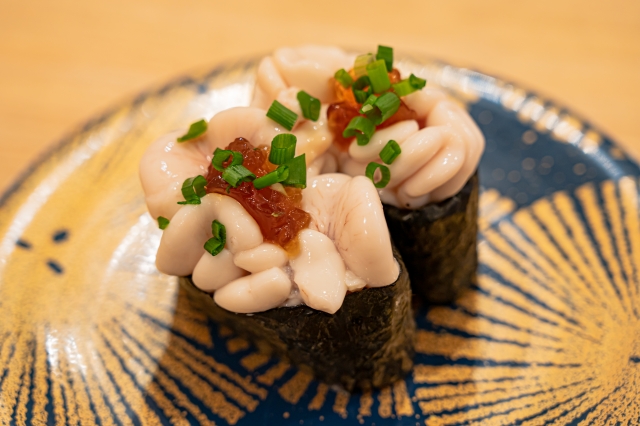

Can you guess what this soft white thing is? It looks like a brain at first sight, but it’s actually fish milt − Shirako. Yes, the sperm sacs of fish. In Japan, this isn’t an everyday food, but it’s quite common as a delicacy. You might have lost your appetite already—sorry!
As fish lovers, Japanese people eat almost every part of the fish: the head, eyes, innards, roe, and even the milt (mainly from cod). Many people regard these as delicacies. Not every Japanese person enjoys them though—I, for example, love cod roe (tarako) but don’t like cod milt (shirako). Tarako is more common, but many people love shirako and even consider it expensive. Who would have imagined that fish milt could sell for such a high price—up to 10,000 yen (about 75 USD) per kilogram—sometimes more expensive than beef steak! (Personally, I’d go for the steak.)
Why Some Japanese People Love Shirako
Since I personally don’t like shirako, let me borrow the words of shirako lovers to describe its taste. They say it has a rich, creamy flavor, almost like dairy cream. It’s not just rich, but also has a delicate sweetness that gives it an elegant, luxurious quality. The outside is firmIt’s Notorious—but Nutritious and slightly chewy, while the inside is meltingly smooth—this unique contrast in texture is one of shirako’s main attractions.
Why Shirako Is Both Loved and Feared
Despite its reputation, shirako actually contains protein, vitamins, and minerals.
Protein
Shirako contains about 13.4 g of protein per 100 g. Protein is essential for building muscles and internal organs and also plays an important role in regulating bodily functions, including hormones.
For comparison, meats like chicken and beef contain around 21 g per 100 g. A typical serving of shirako is about 50 g, which provides roughly 7 g of protein—more than 10% of my daily protein requirement.
Vitamins
Shirako is rich in vitamins D, E, and B. Each has important functions:
• Vitamin D: Promotes calcium absorption and supports bone and tooth health
• Vitamin E: A strong antioxidant that helps maintain healthy blood vessels and may slow aging
• Vitamin B1: Supports carbohydrate energy metabolism
• Vitamin B2: Supports fat metabolism
• Niacin (Vitamin B3): Involved in energy production
• Vitamin B12: Essential for red blood cell formation
Minerals
Shirako also contains minerals such as potassium and phosphorus.
• Potassium helps remove excess sodium from the body and may help prevent high blood pressure.
• Phosphorus is essential for building bones and teeth.
However—Don’t Eat Too Much Shirako
Just in case you fall in love with shirako, here’s a warning. Shirako is high in purines.
Purines are natural substances found in all living cells. They are broken down in the liver into uric acid, which is normally excreted from the body. However, when too much uric acid builds up, it can cause health problems.
The recommended upper limit for daily purine intake is 400 mg. Shirako contains about 305.5 mg per 100 g, which is quite high.
If uric acid continues to accumulate, it can increase the risk of certain conditions.
Gout
High uric acid levels over time can lead to gout, a painful form of arthritis caused by uric acid crystals forming in joints such as the toes or earlobes.
Kidney Damage
Excess uric acid can also harm the kidneys. When crystals accumulate there, they may cause a condition called gouty kidney, which gradually reduces kidney function.
Even poisoned puffy fish’s milt!?
I wrote before about pufferfish, which can be poisonous, but Japanese chefs have learned to prepare it safely. Surprisingly, the milt of pufferfish doesn’t contain any poison, so it’s safe to eat—and considered even rarer and more expensive than cod’s. We even call it “the gem of the sea.” Imagine—fish never knew their sperm sacs would one day be called a gem!
A Bit of History
Shirako has been eaten in Japan for centuries, especially as a winter delicacy. The word “shirako” literally means “white children,” referring both to its appearance and function. Traditionally, people upper class people enjoyed it at high-end restaurants but over time it spread to izakaya (Japanese pubs). Even today, many people still see it as a seasonal luxury, something to treat yourself to in the cold months rather than everyday food.

Not Only in Japan
It looks like Japan isn’t the only place where people eat fish milt. I found a website that says in Russia it’s called moloka, and it’s often fried or added to soups. In Italy, especially in Sicily, tuna milt (lattume) is eaten grilled or mixed into pasta.
Milt: The Unexpectedly Luxurious Ingredient You Should Know
So, while shirako might surprise people at first, enjoying fish milt is actually a tradition shared by several cultures around the world.
I even found a recipe for pasta with fish milt. It actually looks delicious—as you’d expect from Italy, the country of food lovers! You should take a look at it ↓
https://www.cookwithgrazia.com/recipes/pasta-with-fish-sperm-sacs-pasta-con-lattume-di-pesce
But even after digging deep into research, I couldn’t find much about milt in Russia—not even a single photo! If you’re Russian, please send me a message and let me in on your secret milt culture. I’m curious!
Still, I have to say—Japan definitely wins when it comes to the number of ways to enjoy shirako!!
How We Eat Shirako
The most common way to eat shirako is with ponzu (a mix of soy sauce and citrus juice). First, wash the shirako gently in salted water, boil it for about 2 minutes, drain, and then serve with ponzu. Toppings like chopped spring onions and momiji oroshi (grated daikon radish with chili pepper) make it even better.


This photo shows pufferfish shirako tempura: crispy outside, creamy inside. Doesn’t it look tempting? I even found a restaurant specializing in pufferfish dishes where you can eat shirako tempura for about 15 USD—a surprisingly reasonable price!
おしながき(一品料理)|とらふぐ料理専門店「とらふぐ亭」公式サイト
Where Can You Get It?
I found frozen shirako at a Japanese online store in the UK called Waso. You might also be able to find it at Japanese grocery stores in your country.
I did consider buying some and trying it myself so I could report back here—but honestly, I wasn’t brave enough. It’s also quite expensive: about £300 for 500 g. (→ Shirako Cod Milt 500g | ITEMS | WASO: Japanese Food & Grocery Delivery in UK)
I asked my family in Japan if they had eaten it recently so I could get photos, but unfortunately, they’re not fans of shirako either.
Still, trust me—shirako has many devoted fans in Japan. I might become one too. I just haven’t tried it yet.
Next time I visit Japan, I promise I’ll try shirako tempura—and I’ll share the experience here.
Conclusion
So, how was it? I’ve shared about other unusual Japanese foods before, like pufferfish(→here), fermented soybeans (natto), and salted squid innards. Japan has so many unique food traditions—even I’m still discovering new ones! I’ll keep posting more about these funny and fascinating dishes, so stay tuned.