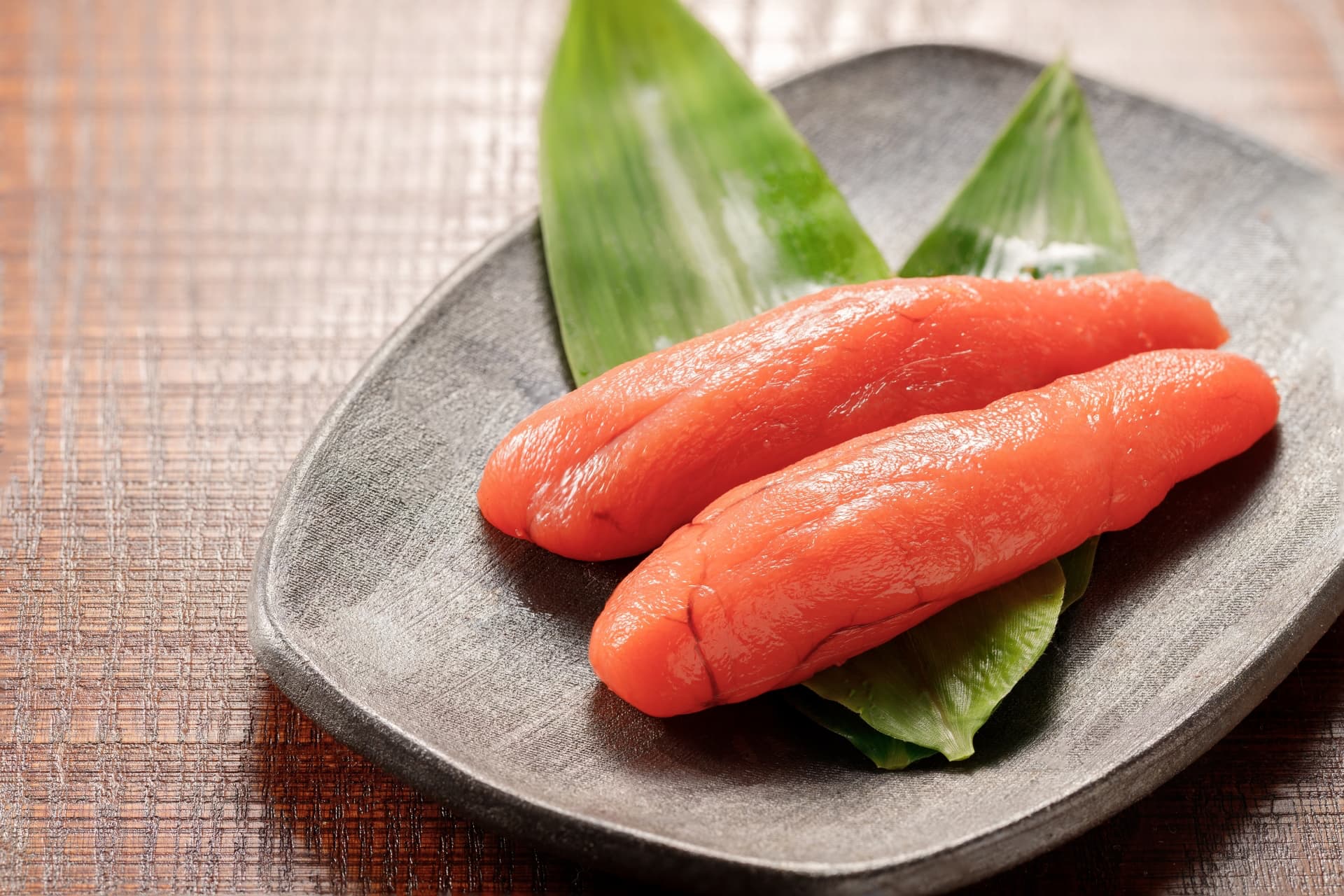
Why Tarako Is Everyday Comfort Food in Japan
When I first mentioned tarako pasta —cod roe —to my British friends, the reaction was always the same:
“Fish eggs… with pasta?”
In Japan, however, tarako is not strange at all.
It’s everyday food—something people eat at home with rice, just like toast or cereal.
Japan has many unique food traditions. I’ve already written about pufferfish, natto (fermented soybeans), and salted squid innards.
Today, I want to introduce something that looks unusual but is much easier to try: tarako, or cod roe.
There is also a spicy version called mentaiko, which is extremely popular in Japan.
Fukuoka, especially the Hakata area, is famous for it.
Japanese people enjoy cod roe not only with rice, but also in pasta and many other everyday dishes.
Compared to salmon roe (ikura), which you often see on sushi, cod roe is much smaller and more casually eaten.
Why Do Japanese People Love Cod Roe So Much?
Tarako is simply salted and has a mild flavor with a slightly firm, grainy texture.
Mentaiko, on the other hand, is seasoned with chili peppers and spices, giving it a spicy, rich umami taste.
The main difference is simple:
• Tarako is not spicy
• Mentaiko is spicy
Personally, I prefer mentaiko, and many Japanese people seem to feel the same way.
It’s flavorful, easy to use, and works well in both traditional and Western-style dishes—which is part of its appeal.
Spicy Cod Roe – A Fukuoka Specialty
If this sounds tempting, Fukuoka is the place to go.
It’s a popular travel destination, especially for visitors from Hong Kong, Korea, Taiwan, and China, thanks to its location and vibrant food scene.
Fukuoka is famous for ramen, hot pot dishes, and of course, mentaiko.
The well-known ramen chain Ichiran actually started here and has since expanded overseas, including into Europe.
Why Cod Roe Feels “Creepy” to Westerners
I understand that fish roe can sound a little “creepy” to many Western readers.
But think about caviar—it’s also fish roe, yet it’s considered a luxury food around the world.
If people can enjoy caviar, why not cod roe?
There’s even a funny marketing story.
A Japanese man once introduced mentaiko in New York, but instead of calling it “spicy cod roe,” he renamed it Hakata spicy caviar.
Suddenly, it became a huge hit. People loved it and said it paired perfectly with alcohol.
Soon, customers were enjoying champagne with “Hakata spicy caviar.”
Marketing really does matter.
Three Important Things to Know Before Eating Cod Roe
1. It’s Often Raw
Tarako and mentaiko are often sold raw. If the package says “for raw consumption,” it’s safe to eat as is.
However, products labeled “for cooking” should not be eaten raw.
Because it’s salted but still perishable, it’s best to eat it as soon as possible.
Pregnant women are generally advised to eat cooked versions due to the risk of Listeria.
2. Listeria
Listeria is a type of bacteria that can contaminate chilled, ready-to-eat foods.
Most people experience only mild symptoms, such as fever, aches, nausea, or diarrhea, but it can be dangerous for pregnant women.
3. Anisakis (Parasites in Raw Fish)
Anisakis is a parasite sometimes found in raw fish. It can cause severe stomach pain, but it can be prevented.
Anisakis dies when:
• Frozen at −20°C for 24 hours, or
• Heated to 70°C or higher
Most tarako and mentaiko sold in Japanese stores have already been frozen, so the risk is low.
Occasionally, you may see a thin white strand inside the roe—that could be anisakis. If it has been properly frozen, it is harmless, but people with allergies should avoid it.
In Japan, people grow up eating these foods, so there is shared cultural knowledge about how to handle them safely.
From Korea to Japan: How Mentaiko Took Root
The tradition of processing and eating walleye pollack roe originally spread across the Korean Peninsula between the 17th and 18th centuries. Just like kimchi and gochujang, spicy cod roe seasoned with chili peppers and garlic has long been a Korean staple.
In Japan, modern mentaiko was developed after World War II, when Japanese people returning from Korea adapted the dish to Japanese tastes by seasoning salted cod roe with chili peppers. Production started in Hakata, Fukuoka, and that’s why mentaiko is still strongly associated with this area.
How We Eat Mentaiko
The simplest way to enjoy mentaiko is on warm, soft rice. But of course, Japan has invented countless ways to enjoy it:
• Rice balls (onigiri)
• Spaghetti
• French bread
• Udon
• Pizza
There’s even mentaiko paste, making it super easy to spread on bread or mix into pasta. For Europeans, for many Europeans, I think mentaiko pasta is the most approachable way to try it.


Usually the raw egg was added so that udon becomes creamy and goes so well with mentaiko.↓
Can You Buy It in the UK?
Yes! You can order tarako or mentaiko from Japanese online stores, but they can be a bit expensive.
Personally, I sometimes buy canned cod roe from UK supermarkets like Tesco or Asda. It’s surprising, isn’t it? This product is made in Denmark.


Simple Cod Roe Pasta Recipe
Ingredients
• 80g pasta
• 100g cod roe
• 1 tbsp mayonnaise
• 10g butter
• Salt
• Nori seaweed
Steps
1. Boil the pasta.
2. Drain and mix with cod roe, butter, and mayonnaise.
3. Adjust seasoning with salt.
4. Sprinkle chopped nori on top.
I also like adding a half-boiled egg—it’s delicious.(→Japanese eat raw egg)
The grainy texture of the roe clings to the pasta, while butter and mayonnaise mellow the flavor beautifully.


Conclusion
“Don’t judge a book by its cover.”
Mentaiko might look unusual, but once you try it, you may discover it’s not just funny—it’s absolutely delicious.
Reference